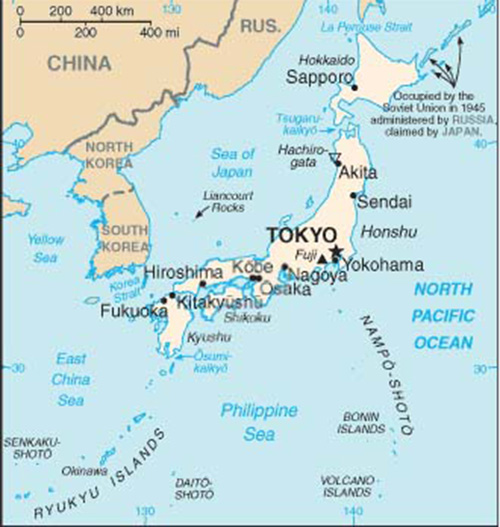
A powerful earthquake measuring magnitude 7.1 on the Japan Meteorological Agency scale struck Kumamoto Prefecture on the southern island of Kyushu late Tuesday afternoon, causing widespread damage, power outages, and injuries while trapping people inside a partially collapsed shopping mall. The United States Geological Survey later revised its estimate to magnitude 6.8. The quake hit at approximately 4:27 p.m. local time near the city of Uto, at a shallow depth of about 10 kilometers, and registered the maximum intensity of 7 on Japan’s shindo scale in the hardest-hit areas.
Authorities reported at least one confirmed death and more than 50 people injured in the initial hours after the tremor. A person was killed when a house collapsed in the Yatsushiro area, according to local police. Hospitals in the region, including one in the town of Hikawa, treated dozens of injured residents. Public broadcaster NHK said one facility alone was handling at least 50 patients with quake-related injuries. Additional injuries were reported among passengers on a high-speed train and at other locations, with some accounts placing the total injured in the dozens to low hundreds as assessments continued.
The most serious ongoing rescue operation centered on the Aeon Mall in Kashima. Fire officials said the second floor of the shopping complex partially collapsed following reports of an explosion and white smoke shortly after the main shock. Many people were trapped inside, and police indicated that 20 to 30 employees could not be contacted. Local media cited sources saying a considerable number of people were feared dead at the site, though official confirmation of additional fatalities remained pending as emergency crews worked through the rubble. About 200 people evacuated to the mall’s parking lot. Separate reports noted people unaccounted for at a Nippon Paper Industries factory in Yatsushiro after a chimney collapsed.
Structural damage was extensive across Kumamoto Prefecture. At least 12 houses collapsed, according to local police, and several buildings suffered partial failures. Fires broke out in multiple locations, including Uki and areas near the epicenter. Elevated sections of the Kyushu Expressway sustained significant damage, with one overpass broken into pieces and a pedestrian bridge section collapsed in Yatsushiro. A freight train derailed at Yatsushiro station. Historic sites were also affected: stone walls at Kumamoto Castle were damaged, and a shrine at Yatsushiro Castle Ruins collapsed.
Infrastructure disruptions compounded the impact. Kyushu Electric Power reported that roughly 48,000 households lost electricity in the immediate aftermath, though some restoration was underway. All rail services on Kyushu, including the Shinkansen bullet trains, were suspended. Kumamoto International Airport closed its runway, canceling flights. Expressways in the prefecture were shut down, and local roads showed cracks and buckling. More than 150,000 people were instructed to evacuate to shelters in the hardest-hit zones.
A tsunami advisory was issued for the Ariake and Yatsushiro seas shortly after the quake, warning of possible waves up to one meter, but it was lifted within about two hours after no significant waves were detected. The Japan Meteorological Agency warned residents to remain alert for strong aftershocks, including the possibility of another quake of similar intensity in the coming days, particularly over the next two to three days. Dozens of aftershocks were already recorded in the hours following the main event.
Prime Minister Sanae Takaichi said the government had established an emergency task force to assess damage and coordinate rescue efforts. She confirmed reports of injuries, power outages, fires, and damage to roads, bridges, and buildings. Approximately 3,600 Self-Defense Force personnel were dispatched to assist. Chief Cabinet Secretary Minoru Kihara reported no abnormalities at nuclear facilities, including the Sendai plant roughly 100 kilometers from the epicenter.
The epicenter lay near the Hinagu fault zone, the same region struck by deadly earthquakes in April 2016 that killed 278 people. Officials noted the shallow depth and strike-slip nature of the faulting contributed to the intense local shaking. Rescue operations continued into the night as teams searched collapsed structures and worked to restore basic services. Full casualty and damage tallies were expected to rise as communications improved and daylight assessments expanded across the affected prefectures.