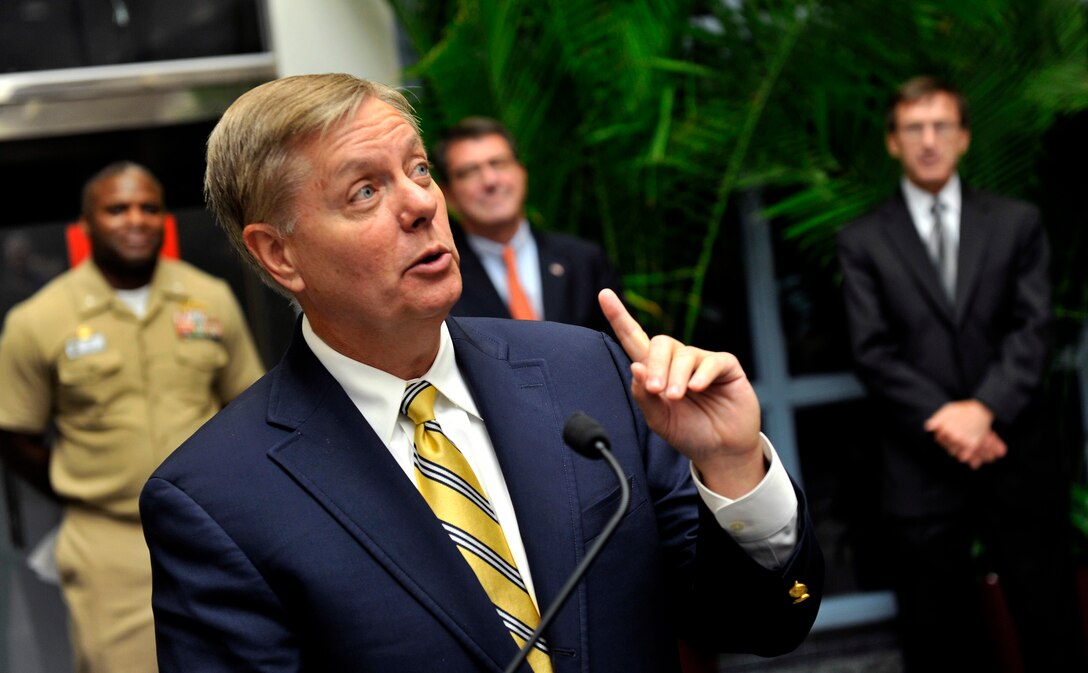
WASHINGTON – U.S. Senator Lindsey Graham of South Carolina, a longtime Republican lawmaker and close ally of President Donald Trump, died Saturday night at the age of 71. His office described the cause as a “brief and sudden illness,” but details surrounding the exact circumstances remain limited and have sparked questions.
Emergency responders arrived at Graham’s Capitol Hill residence around 8:30 p.m. Saturday following reports of chest pains. Police scanner audio and subsequent accounts indicate that medical personnel performed CPR as they treated a man experiencing cardiac arrest. Paramedics later transported an individual on a stretcher from the home to an ambulance. No official autopsy findings or detailed medical cause have been released publicly.
A top staffer told reporters that Graham showed no signs of illness beforehand. The senator had returned to Washington earlier that day after a trip to Kyiv, Ukraine. On Friday, July 10, he met with Ukrainian President Volodymyr Zelenskyy during what was reportedly his 10th visit to the country amid ongoing discussions on U.S. support. Graham had been scheduled to appear on NBC’s “Meet the Press” on Sunday morning.
Graham’s office issued a statement early Sunday confirming the death. “On the evening of Saturday, July 11, U.S. Senator Lindsey Graham passed away from a brief and sudden illness,” it read. “Senator Graham’s family appreciates prayers at this time and asks for privacy during this incredibly difficult period.”
The senator, who turned 71 last week, had served in the Senate since 2003 after terms in the U.S. House and South Carolina legislature. Known as a foreign policy hawk, he evolved from an early critic of Trump to one of his most steadfast supporters, frequently advising on issues involving Iran, Russia, and Ukraine. He had recently won the Republican primary for a fifth term and was actively campaigning ahead of the November election.
Reactions poured in from across the political spectrum. President Trump and other Republican leaders expressed condolences, highlighting Graham’s dedication to national security. Democratic colleagues also noted his long service, even amid frequent policy disagreements.
South Carolina Governor Henry McMaster is expected to appoint a temporary replacement under state law. A special election will coincide with the November general election to fill the remainder of the term.
As tributes continue, the lack of further information on Graham’s final hours has left some observers seeking clarity on the rapid sequence of events following his return from overseas travel. His family has requested privacy as they grieve.